Sunday, 21 February 2016

Quibans 21: Shoppers fail to spot cheapest deals

So many people have sent me a link to this news story!  One way to use it would be to give students the link to the story and to ask them to read it.  They could create questions on the way through and then answer the questions in the quiz.  http://www.bbc.co.uk/news/business-35539416

Unfortunately the answers are given at the end of the article, so you might want to use this cut-down version:


Shoppers 'fail to spot cheapest deals'

Most grocery shoppers are unable to identify the cheapest deals when faced with a blizzard of "special offers" in stores, financial experts say.

The Money Advice Service asked just over 2,000 consumers to select the best value deals from four sets of offers. Only 2% of those asked answered all four questions correctly.

In the survey, 76% of those asked said they spent more than they intended, after being enticed by special offers, paying an average £11 extra per shop.

Later on Thursday, Sainsbury's announced that it would phase out multi-buy promotions by August 2016. Sainsbury's Marketing Director, Sarah Warby said customers had told them they found multi-buy promotions "confusing" and created "logistical challenges at home in terms of storage and waste." The government-backed Money Advice Service said shoppers should look at the price per unit to compare costs. It also suggested making, and sticking to a shopping list.

Special offers test
The Money Advice Service tested shoppers with the following questions (answers at the bottom)

1. Of the following options for milk, which represents the best deal?
a) Six pints of milk for £1.80
b) Four pints of milk for £1.40
c) Two six-pint cartons of milk on offer for £3.50
d) Two four-pint cartons of milk on offer for £2

2. Of the following options for buying 500g of lemons, which represents the best deal?
a) One 500g pack of lemons costing £1.20
b) 500g of loose lemons at £2.50 per kilo
c) Buy two get the third free deal on 200g packs of lemons costing 70p each
d) Buy one get one half-price deal on 250g packs of lemons costing 70p each

3. Of the following options for buying tomato ketchup, which represents the best deal?
a) One 460g bottle on offer at £1.50
b) One 910g bottle costing £2.49
c) Buy one get one half-price deal on 700g bottles costing £2.29 each
d) One 1.35kg bottle costing £3.50

4. Of the following options for buying eggs, which represents the best deal?
a) Six medium eggs for £1.10
b) Ten medium eggs on offer for £1.50
c) Fifteen medium eggs for £2.10
d) Two packs of six medium eggs on offer for £2
e) Buy one get one free offer on packs of 10 medium eggs priced at £2.20


Other possible questions:
  • Roughly how many people got all four questions right?
  • 76% spent £11 more (on average).  How much (on average) was spent by each person?
  • Why might you sometimes not want to buy the best value option?

Answers to the quiz:
1d (25p per pint); 2d (£2.10 per kilo); 3c (£2.45 per kilo); 4e (11p per egg)

Source:

Quibans 20: Three short Quibans (from 'Go Figure')

The BBC has a feature on its website called Go Figure: The week in numbers.

Each day they tweet an image related to a number-filled news story and they gather these together at the end of the week.  Here are three short Quibans (with slightly longer versions that involve starting with the same image but then with extra information).  The short ones could be starter activities.

Quibans 20.1:  What questions can you ask/answer?
Shorter version:

Possible questions:

  • How much sugar should an adult have per year?
  • How many large chai lattes could an adult drink per year?
  • Three days would clearly be 90g of sugar, so how long (in days/hours/etc) should this drink be made to last?
Longer version:
'Shocking' sugar levels in High Street hot drinks, warns charity
"I used to drink a large white cafe mocha with caramel and vanilla syrup, cream on top, caramel and chocolate drizzle at Starbucks - approximately three times a day, seven days a week.
"I did this for about a year. At the time, I knew this drink had lots of sugar and fat, but I wasn't aware of just how much.
"At one point the assistant manager refused to serve me because they were concerned of the health impact. The rest of the staff continued to serve me.
"I drastically cut back on these sugary drinks after I was diagnosed with a very high cholesterol level and liver problems three years ago.
"I still have high cholesterol now and was recently diagnosed with a fatty liver - which means it is not working properly - not from alcohol but from sugar."
Question:
How much did the person quoted in the article exceed his annual sugar intake by?


Quibans 20.2:  What questions can you ask/answer?
Shorter version:

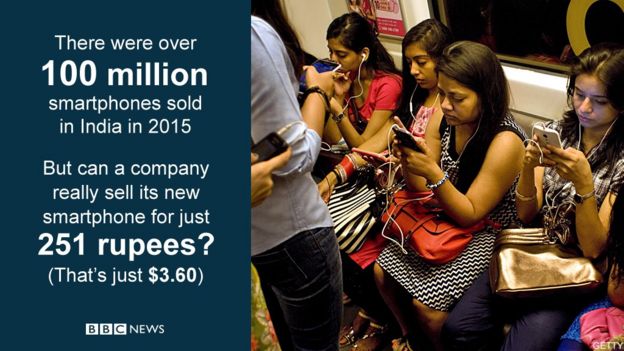
How much?! Some think the new smartphone will sell at a 90% loss

Possible questions:

  • What is the exchange rate between RS and $ ?
  • What is the cost of making them if they are sold at a 90% loss?
Longer version:
Is India’s $3.60 smartphone too good to be true?
On Wednesday evening a virtually unknown Indian company launched the "world's cheapest smartphone", named Freedom 251, for 251 rupees ($3.60; £2.50), in Delhi.

According to media reports, the Indian Cellular Association has written to telecoms minister Ravi Shankar Prasad saying it was not possible to sell a 3G phone below 2,700 rupees.

Smartphones, on the other hand, saw a huge spread in prices. But the top selling category, accounting for over 22% of smartphones sold in India in 2015, were for 4,000 to 6,000 rupees - rather than in the cheapest price range for smartphones, which starts below 3,000 rupees. So cheapest isn't the bestseller for smartphones.
Possible questions:
  • How much (in £) should the cheapest 3G phone cost?
  • How many smartphones cost between 4,000 and 6,000 Rupees?
  • What is the approximate total cost of those phones (in £)?


Quibans 20.3:  What questions can you ask/answer?
Shorter version:
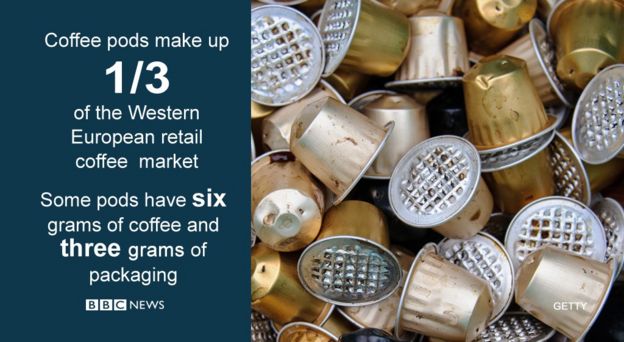
Coffee pods make up one third of the €18bn (£13.9bn) Western European coffee market.

Possible questions:

  • Find out how much a pod costs (Google, or online shopping site).  Then work out how many are sold each year.
  • How much packaging is produced?

Longer version:
Is there a serious problem with coffee capsules?

Coffee pods make up one third of the €18bn (£13.9bn) Western European coffee market.

In the last year more than £112m-worth of coffee pods were sold in the UK, up by a third from 2014. Sales are expected to treble by 2020, at which point coffee capsule sales could overtake those of tea bags.

In Halifax, 200,000 or more capsules have been kept away from landfill by convincing residents to take their coffee in a different manner.

Nespresso runs its own recycling programme, where it picks up used capsules for reuse. A company spokesperson said that it has in place the capacity to recycle over 80% of used capsules

Two billion cups of coffee are drunk around the world every day and 25 million families rely on growing coffee for a living. Over the past 15 years, consumption of the drink has risen by 43% - but researchers are warning that the world's most popular coffee, Arabica, is under threat.
Questions:

  • What fraction of the coffee pods sold in Western Europe were bought in the UK?
  • What was the cost of the UK pods in 2014?
  • 200,000 is what fraction of the UK pods sold in 2015?
  • How many pods can Nespresso?  [NB: they "have the capacity" to recycle this many - it doesn't mean that people do recycle them!]
  • How many cups of coffee does each producer create (on average) per day?
  • Global consumption of coffee has grown over the past 15 years.  But so has the global population.  Google the population 15 years ago and now and find out whether coffee consumption per person has actually gone up or down, and by how much.


Sources:
http://www.bbc.co.uk/news/blogs-magazine-monitor-35616091
http://www.bbc.co.uk/news/health-35593007
http://www.bbc.co.uk/news/world-asia-india-35601544
http://www.bbc.co.uk/news/magazine-35605927

Saturday, 6 February 2016

Quibans 19: Stolen Road

Bizarre, brief Quibans from BBC News:

Russia highway robbery: Official 'stole 50km road'

A senior prison official has been detained in Russia accused of stealing a 50km (31-mile) length of highway.

Police said Alexander Protopopov, acting deputy chief of Russia's prison service, oversaw the dismantling of the road in the far-northern Komi region. He then sold off its 7,000 reinforced concrete slabs for personal profit, they added. Officials believe the scheme cost the government more than 6m roubles ($79,000; £54,000).

The road was "dismantled and driven away" over the period of more than a year, between 2014 and 2015, the Investigative Committee said in a statement quoted by the AFP news agency.

The concrete slabs were then used by a commercial company which also sold them on for a profit, it added.

The construction of a mountain highway for the Sochi Winter Olympic Games cost about $8bn (£5.6bn), with Russian media claiming it would cost the same to slather the 48km road with black caviar.
So many questions!

  1. How big are the concrete slabs?
  2. How much does each slab cost?
  3. What is the exchange rate between Roubles, Dollars and Pounds?
  4. How much did the Sochi road cost per km?
  5. How thick would the caviar be?

Source:

Quibans 18: Library books

from The Independent:
On National Libraries Day, behold the world's most overdue library books

Saturday the 6 February marks National Libraries Day.  In celebration of our local libraries here's a round-up of the most overdue books in the history of the world.

The Law of Nations.  Checked out 1789, replaced in 2010
George Washington borrowed this essay on international affairs from the New York Society Library in 1789. It was replaced 221 years later - though the first US President had accrued a fine of $300,000 (£195,000).

Days and Deeds.  Checked out 1955, taken back in 2002
The largest fine paid for an overdue library book is $345.14 (£203.29). Emily Canellos-Simms paid the fine to Kewanee Public Library in Illinois after finding the book in her mother’s house.
The Picture of Dorian Gray.  Checked out 1934, taken back in 2012
Harlean Hoffman Vision returned the Oscar Wilde novel to Chicago Public Library during an amnesty on fines. She said she feared she would face jail time.

Possible questions:
  1. Are the figures here reasonable?  (Hint: no!)
  2. How do we know the Law of Nations figure is likely to be wrong?
  3. What would be a reasonable fine for Law of Nations?
  4. Using the Days and Deeds fine, how much would The Picture of Dorian Gray's borrower have been fined?
  5. Cambridgeshire public libraries charge an overdue fee of 25p per day.  Havering council charge 36p per day.  How much would the fines have been for these books had they been borrowed from a Cambs library or a Havering library?

Answers:

1&2) 221 years is about 221 x 365 = 80665 days. That is £2.42 per day!
3) Days and Deeds was out for about 47 years and the fine was £203.29, which works out at 1.2 pence per day. Using this figure for Law of Nations gives £956. Lots, but not as much as quoted. Using the 25p per day charged in Cambridgeshire, you get £20,166.
4) About £337
5) Law of Nations: £20,166 in Cambs, £29,039 in Havering.
Days and Deeds: £4289 and £6176.
Dorian Gray: £7118 and £10249.

It is worth noting that Cambridgeshire has a maximum fine for one book of £5.


Source:

Saturday, 30 January 2016

Quibans 17: Lee Child

From The Spectator:
Writing a bestseller ‘on the verge of a stroke’

Every four seconds, somewhere in the world, a Lee Child book is sold. This phenomenal statistic places Child alongside Stephen King, James Patterson and J.K. Rowling as one of the world’s bestselling novelists. But what makes the Jack Reacher books so successful? This is one of the questions Andy Martin, a lecturer in French and Philosophy at Cambridge, sets out to answer in this intriguing and uniquely unclassifiable book. Reacher Said Nothing, however, isn’t a work of literary criticism or a how-to guide. Martin contacted Child and asked whether he could observe the entire writing process for the 20th Reacher novel, Make Me. Amazingly, Child said yes.
‘So far I have no title, no real plot…. I don’t have a clue about what is going to happen,’ Child tells Martin on the first day. This, for most novelists, would be a startling admission, especially in crime fiction where plotting is paramount. Martin perches on a couch as Child sits down, lights a cigarette, and begins to write. By the end of the day, Child has smoked 26 Camels, drunk 19 cups of coffee (‘I’m writing on the verge of a stroke,’ he quips) and written 2,000 words.

Throughout the seven months it takes to write the novel, Martin continually questions Child over the choices he makes,

Possible questions:
  1. "Every four seconds ...".  How many books are sold each year?
  2. How much money does Lee Child make?
  3. How long is one of his books?
  4. How many cigarettes and cups of coffee did he consume while writing the book?

Answers:
  1. There are 365 x 24 x 60 x 60 seconds in a year (31,636,000 seconds).  Divide this by 4 to get 7,884,000.  Nearly 8 million copies per year.
  2. This is difficult to answer, because hardback books are more expensive than paperbacks, we don't know how much of the money goes to the publisher, on advertising, on the cost of printing, etc, and how much goes to the author.  Presumably it costs different amounts in different countries too.  If the author gets 50p per copy then that would be £4 million per year.
  3. We don't know enough about the writing process.  If he writes 2000 words every day for seven months then that is about 420,000 words.  If he writes 5 days a week then it would be 5/7 of that (300,000).  If half of the time is spent redrafting and rewriting then it would be about half that.  I looked up the length of the Harry Potter books.  They range from just over 75,000 words to over a quarter of a million words.  
  4. If his consumption was constant and over seven months of 5-day writing weeks then he would consume nearly 4000 cigarettes and nearly 3000 cups of coffee.

Friday, 29 January 2016

Quibans 16: The London Underground

This is a longer and more involved Quibans, using information taken from an article in the Daily Telegraph.  The article was headed "150 fascinating Tube facts".  I have only reproduced a handful of them below.
London Underground: 150 fascinating Tube facts

1. There is only one Tube station which does not have any letters of the word 'mackerel' in it (*)

2. The average speed on the Underground is 20.5 miles per hour including station stops.

19. Over 47 million litres water are pumped from the Tube each day, enough to fill a standard leisure centre swimming pool (25 metres x 10 metres) every quarter of an hour.

31. Tube trains travelled 76.4 million kilometres last year.

34. The total length of the London Underground network is 250 miles.

90. According to TFL, London Underground trains travel a total of 1,735 times around the world (or 90 trips to the moon and back) each year.

149. The average distance travelled by each Tube train annually stands at around 114,500 miles.

Sometimes we can work something out using one of the statements.  Sometimes we need to combine some of the facts.  What can we work out?

(*)  The first one is included because it is one of my favourite Tube facts.  I was told this by Pete Capewell back in 1995.  (The answer is St John's Wood.)

Here are some possible questions:
  1. What is the average depth of a standard swimming pool?
  2. What is the ratio of the distance of the moon from earth to the circumference of the earth?
  3. What is the ratio of the distance of the moon from earth to the diameter of the earth?
  4. How many trains are there on the London Underground?
  5. How far away is the moon?
  6. Roughly how frequently do the trains run?
  7. How many hours does each train work per day?


Answers:
  1. Using fact 19:  47 million litres of water = 47,000 cubic metres of water (because 1000 litres = 1 cubic metre).  Divide by 24 to get the amount of water per hour and then divide by 4 to get the amount of water pumped out every 15 mins.  This gives the amount of water in a swimming pool as 489.6 cubic metres.  The area of the top of the pool is 25x10 = 250 square metres, which gives an average depth of 1.96m.  As the statement has some "about"s in it then it would be appropriate to give the answer as "about 2m".
  2. Using fact 90:  1735 divided by 180 = 9.6, so the ratio is about 10 : 1.  ("the moon and back" means we divide by 180.)
  3. The circumference is pi times as much as the diameter so we need to multiply by pi.  This gives approx 30:1
  4. Fact 31 tells us the total distance travelled by all of the trains is 76.4 million km, and fact 149 says the average distance travelled by each train is 114,500 miles.  We need to convert so they are in the same units but can then just divide.  76.4 million * 5 / 8 gives 47,750,000 miles.  Dividing this by 114,500 gives 417 trains.
  5. Combining facts 31 and 90 gives us 114,500 miles divided by 180.  This is about 265,000 miles.
  6. Using 31 and 34, we get that the network is traversed abou 191,000 times per year (assuming that every part of the network is traversed the same number of times).  This is 523 times per day.  I think the tube runs for about 19 hours per day, which is 19 x 60 = 1140 minutes.  1140 / 523 results in there being a completed coverage of the map every 2.18 minutes.  So the trains are about 2 mins apart on average.
  7. Using facts 2 and 149, we know that each train does 114500 miles per year and therefore 314 miles per day on average.  Time = Distance / Speed, so 314 / 20.5 gives us 15.3 hours of use per day on average.

Thursday, 28 January 2016

Quibans 15 - Chairs

From the Huffington Post, a brief Quibans involving a photograph.


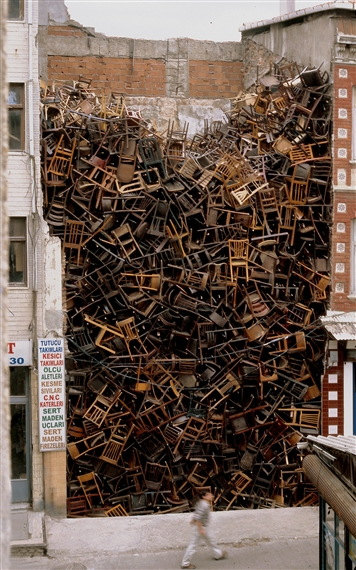
This is a work of art by Doris Salcedo.  The installation is known as 'Istanbul'.

There is an obvious question ...


How many chairs are there?

Answer appears below.


1550

Source: http://www.huffingtonpost.com/mutualart/doris-salcedos-powerful-r_b_6871982.html

Quibans 111: How much energy and water do our AI tools really use?

Here is how I used the article below from the Times.  Before showing the article, I started with this information and these questions: Mic...